Olly Merrill ’10
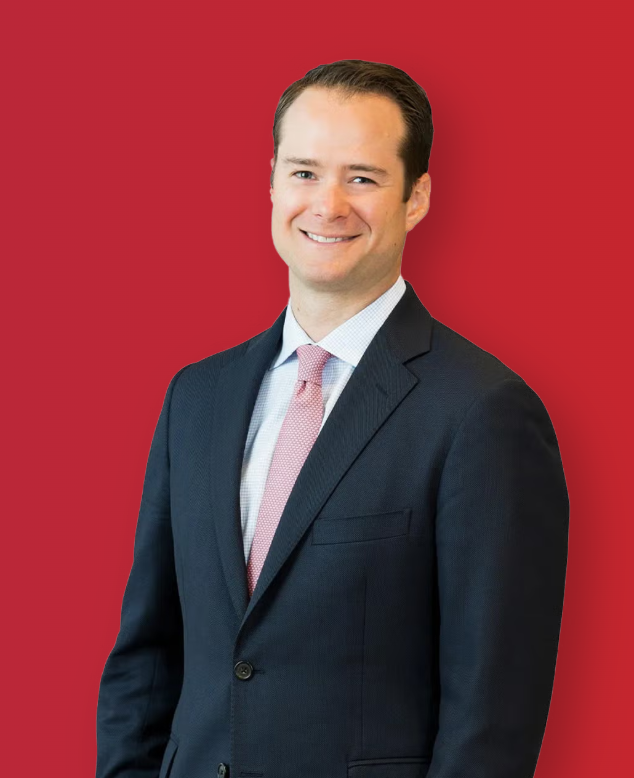 A 2010 graduate, and the child of parents who met at Williams, Olly had strong ties to the college before applying. He was sold by the academic rigor, the lacrosse team and the close-knit community. After graduation and before settling into a legal career, he worked as a fishing and hunting guide in Alaska. He went on to law school at the University of Wisconsin, and later obtained his LLM-Tax from Northwestern University. Olly is now a partner in the Trusts, Estates, and Private Client group at ArentFox Schiff LLP. Given his career, adding Williams to his estate plan came naturally to him.
What motivated you to add Williams to your will?
My time at Williams wasn’t always a smooth ride, but ultimately, those four years were transformative. I was lucky to find great professors, inspiring coaches, and wonderful lifelong friends.
My gifting is motivated primarily by a desire to pay it forward. Given my career, philanthropy and legacy planning is regularly front and center for me. This provides a constant opportunity to ask myself: If something were to happen to me tomorrow, what do I want my “legacy” to be, and what can I do now to support my philanthropic goals and model good stewardship for my children?
What impact do you hope your gift will have?
Given that we’re talking about legacy (testamentary) giving, I hope the impact will come far in the future! I recognize that my individual contribution might not make a huge dent on its own, but I believe the collective impact of alumni giving is vital. I want to ensure the college has the resources to remain a meaningful place for future students, just as it was for me.
Can you share the process for making a planned gift?
Sometimes there is a tendency to view legacy giving, or incorporating specific bequests into an estate plan, as a heavy lift. In fact, the process is pretty simple. Oftentimes, making these types of gifts involves adding a sentence or two to your estate planning documents. It takes less than a milligram of ink.
As an analogy, the planning process is a bit like going to the dentist. It’s a personal maintenance matter - you may not look forward to it or might feel like putting it off, but ultimately you know it’s for your own good. The planning process can involve tough questions, but it can prompt healthy self-reflection and the hope is that completing the process will provide you with a sense of confidence that your affairs are in order and your resources will be used to support the people and places that are meaningful to you.
How can the Office of Gift Planning help?
The Office of Gift Planning can be a great resource, and can certainly play an important role in educating donors on the various opportunities and mechanisms to facilitate your planned giving. They can assist with technical details, like basic naming conventions, as well as big-picture planning opportunities through answering questions and providing information about the types of gift-structures and planning vehicles that might suit your objectives. Discussions with the Office of Gift Planning can be extremely helpful, particularly in conjunction with (or in advance of) updating or implementing your estate plan.
Any other thoughts?
Legacy giving, and the estate planning process, isn’t purely a financial process; it's also a modeling opportunity. We can demonstrate our values, and show those close to us how institutions like Williams remain important to us, and worthy of our continued support.
Megamenu Social